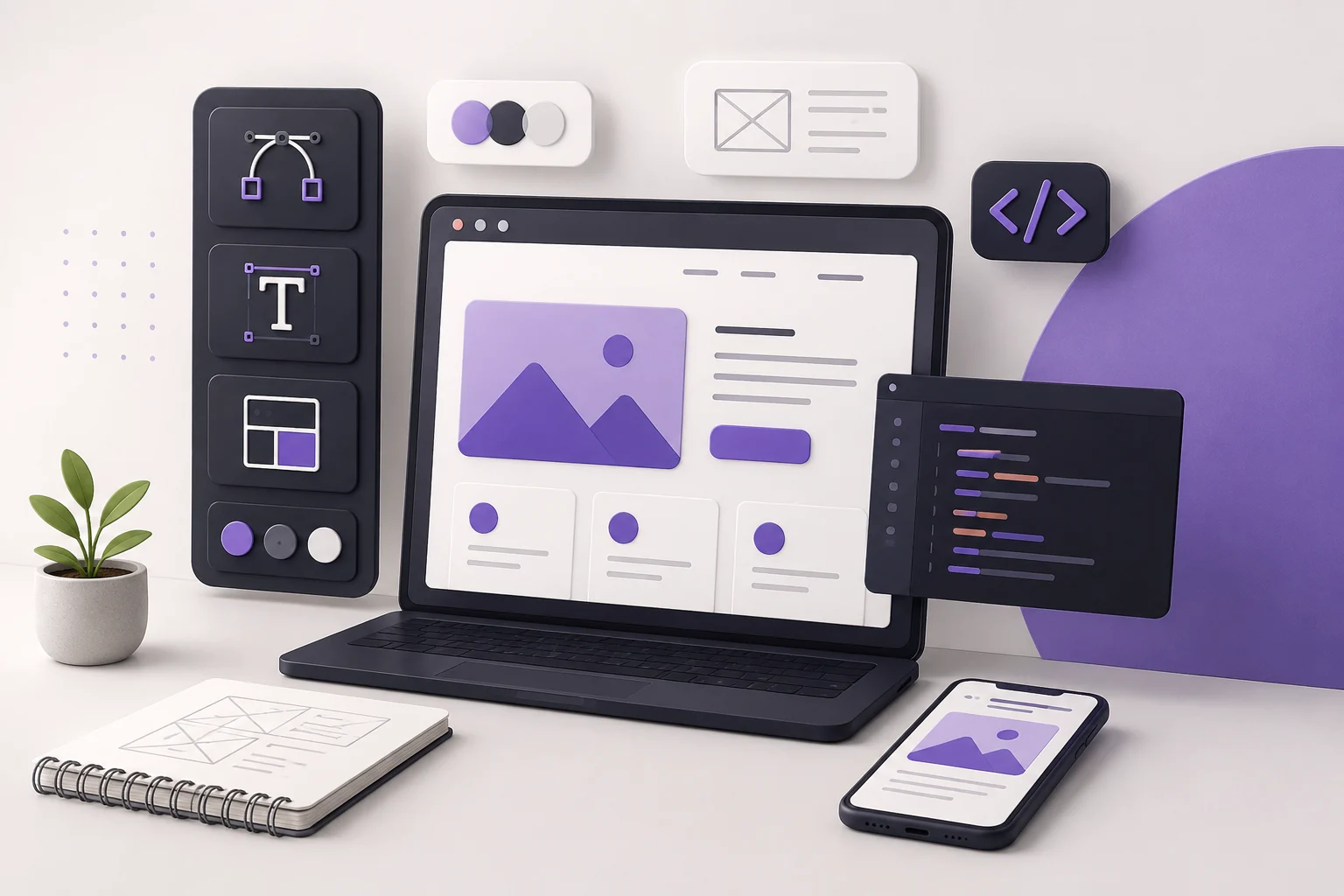
Becoming a web designer requires a mix of visual design, UX/UI knowledge, basic coding skills, CMS familiarity and practical experience. The process starts with core design principles such as color theory, typography and layout, followed by UX/UI principles that help create websites that are clear and easy to use. Basic HTML and CSS knowledge also helps designers understand how web pages work and collaborate with developers.
The next step involves learning design and website-building tools such as Figma, Webflow, Framer and CMS platforms such as WordPress or Shopify. Practical projects help apply these skills and create a portfolio that demonstrates responsive layouts, usability and problem-solving ability. A personal website can showcase selected work to potential clients or employers.
Once the portfolio is ready, aspiring web designers can pursue freelance clients, internships or entry-level roles to gain professional experience and strengthen their skills.
6 Steps to become a web designer
Becoming a web designer requires design fundamentals, technical knowledge, design-tool proficiency and practical experience. Start with color theory, typography, layout, visual hierarchy and UX principles, then learn HTML, CSS and responsive behavior.
Design tools such as Figma, Sketch, Photoshop and Illustrator help create wireframes, mockups and visual designs. CMS and no-code platforms such as WordPress and Webflow also support practical website creation.
Practical projects help turn these skills into a portfolio. Concept websites, redesigns and real projects can demonstrate your capabilities, while a focus on UI, UX, WordPress or eCommerce can support junior roles, internships or freelance opportunities.
The 6 steps to become a web designer are listed below.
1. Understand web design fundamentals
Web design fundamentals combine visual appeal, usability and technical awareness to create effective websites. Visual design principles include color theory, typography, layout, spacing and visual hierarchy, while UX principles focus on user goals, information architecture and clear navigation.
Web-specific knowledge covers HTML, CSS, responsive breakpoints and accessibility basics. This foundation helps web designers create interfaces that look consistent, work across screen sizes and remain practical for development.
2. Learn the essential web design tools
Essential web design tools help you plan, design and build functional websites. Figma supports wireframes, high-fidelity mockups and interactive prototypes, while tools such as VS Code provide a practical environment for working with HTML and CSS.
Web design platforms such as Webflow and WordPress help you turn designs into responsive websites. Visual and asset tools such as Photoshop, Illustrator and Canva support image editing, graphics, icons and other visual elements used in website design.
3. Follow a practical learning roadmap
A practical learning roadmap takes you from design fundamentals to complete responsive website projects in clear stages. Start with basic design principles and static layouts, then learn responsive design, component systems and HTML/CSS implementation.
Hands-on projects turn each stage into practical experience. Build multi-page websites, apply UX research, check accessibility and improve performance as your skills develop. Portfolio projects should then demonstrate your process from the initial brief to the final design, with 3–5 polished examples that show your range and practical ability.
4. Build a strong web design portfolio
A strong web design portfolio showcases 3–5 focused projects that demonstrate your range, design process and practical skills. Choose projects such as a landing page, a business website, an eCommerce site, or a dashboard. Present each project as a concise case study with the problem, design process and outcome.
Portfolio case studies should include wireframes, final mockups, responsive views and links to live demos or prototypes. These details give potential clients or employers a clear view of how you approach website design across different screens and project requirements.
Portfolio websites should use a clean, fast and mobile-friendly layout that reflects your personal brand and design style. Clear navigation and accessible contact information also make it easier for visitors to review your work and reach out.
5. Gain real-world experience
Web designers gain real-world experience through internships, junior roles and freelance projects. These opportunities introduce real clients, project deadlines and feedback that personal practice cannot fully replicate.
Web design projects with small businesses, nonprofits or agencies provide practical experience with client requirements, design revisions and developer handoffs. Each project also adds evidence of professional skills to your portfolio and helps you understand how web design works in a production environment.
6. Apply for web design jobs and continue learning
Web designers can pursue junior roles, UI design positions or freelance work once they have a strong portfolio. Tailor your resume and cover letter to each role, and highlight relevant projects, design tools and web design skills that match the position.
Web design skills also require continuous development as tools, accessibility standards, UX practices and responsive design techniques change. Courses, design communities and real-world projects can help web designers strengthen existing skills, learn new tools and keep their portfolios relevant.
What does a web designer do?
A web designer plans and creates the visual layout, navigation and user experience of websites so they look on-brand and remain easy to use across devices. Web designers create wireframes, mockups and prototypes that establish page structure before development. They select typography, color palettes, imagery and component styles to create a consistent visual identity across the site.
Web designers use user experience (UX) design to organize menus, buttons and user flows so visitors can find information and complete key actions with ease. They apply responsive design to keep layouts, content and interactive elements usable across mobile phones, tablets and desktop screens. They also apply accessibility principles to support readable text, clear navigation, sufficient contrast and usable interface controls.
Web designers collaborate with developers, content writers and marketing professionals to turn approved designs into functional websites. They communicate design decisions and interface requirements so each contributor can maintain the intended visual and user experience.
Web designers use tools such as Figma and Adobe Creative Cloud to create wireframes, mockups and interface designs. Basic knowledge of HTML, CSS and JavaScript also helps them understand how their designs translate into functional web pages.
What skills do you need to become a web designer?
To become a web designer, you need visual design, technical and communication skills. Visual design skills include UI/UX fundamentals such as layout, typography, color theory and visual hierarchy. Responsive design and accessibility skills help web designers create interfaces that remain usable across devices and users.
Technical skills include HTML and CSS, which help web designers create feasible interfaces and communicate design requirements with developers. Proficiency with design and prototyping tools such as Figma, Adobe XD or Sketch also helps web designers create wireframes, high-fidelity mockups and interactive prototypes.
Communication skills help web designers explain design decisions, understand stakeholder requirements and collaborate with developers. Time management also helps web designers meet deadlines and manage multiple project tasks effectively.
What should you know before starting your web design career?
Before starting a web design career, understand that the field combines visual creativity, technical skills and client communication. Web designers need a strong foundation in color theory, typography, visual hierarchy, layout, UI/UX and basic HTML and CSS. Design tools such as Figma and Adobe Creative Cloud also play an important role in creating wireframes and mockups.
Web design work also requires practical skills beyond visual design. Client communication, expectation management and professional responses to feedback are essential parts of real projects. Web designers focus on visual design and user journeys, while web developers handle more complex code and database architecture.
A web design portfolio provides practical evidence of your skills and experience. Mock websites, redesign projects and real client work can demonstrate your ability to solve design problems and prepare you for freelance work or employment.
Is web design a good career?
Yes, web design remains a viable career for people who enjoy visual problem-solving and continuous learning. Website design requires UI/UX skills, responsive design knowledge and basic front-end skills to create fast, accessible experiences across devices.
Do you need a degree to become a web designer?
No, you do not need a degree to become a web designer. A strong portfolio, practical skills and real project experience can demonstrate your ability more directly than formal credentials. Self-taught learning and bootcamps can also provide a path into website design.
How long does it take to become a web designer?
You can develop junior-level web design skills in about 6–12 months with focused, consistent study. A strong portfolio, real client experience and niche specialization can require another 6–18 months, depending on your learning pace and previous experience.
How much does a web designer earn?
Web designer earnings vary by location, experience and specialization. In the U.S., web designers earn around $50,000–$82,000 per year, while senior and specialized roles can command higher salaries.
.svg)
.svg)
.svg)
.svg)