Web design services cover strategy, visual design, UX, responsive layouts, development, basic SEO, analytics and post-launch support. The right service depends on the website type, project scope and level of customization, with costs that range from affordable template-based options to complex enterprise platforms.
Professional web design services can include visual design, user experience, mobile responsiveness, content creation, SEO setup and technical development. Common options range from small business websites and e-commerce stores to custom web applications, redesign projects and ongoing maintenance plans.
Costs vary by provider and project complexity. Freelancers may charge $1,000–$5,000 for basic sites, small agencies $5,000–$15,000 for custom business websites, and larger agencies $15,000–$30,000+ for larger e-commerce or enterprise projects. Ongoing support and hosting can add $50–$500 per month.
What are web design services?
Web design services are professional services that shape a website’s visual structure, user experience and technical presentation. They help establish clear navigation, consistent branding and accessible layouts across devices.
Web design services can cover visual design, UX/UI structure, responsive layouts, front-end implementation, basic SEO elements and performance considerations. The exact scope depends on the website’s purpose, audience and project requirements.
Web design services can also support brand consistency, content presentation and business goals. A well-planned website gives visitors a clear path through the site and maintains a consistent experience across desktop, tablet and mobile screens.
What do web design services include?
Web design services typically cover planning, UX/UI design, responsive layouts, development, CMS setup, basic SEO, testing, and post-launch support. The exact scope depends on the project, but professional services usually move from initial requirements to a tested website.
The 10 components of web design services are listed below.
- Discovery and research: Discovery and research clarify business goals, target audiences, required pages and key messages before the project moves to wireframes.
- Sitemaps and wireframes: Sitemaps and wireframes establish page relationships, navigation, content hierarchy and basic layouts before visual design begins.
- UI/UX design: UI/UX design defines page layouts, interface components, typography and visual elements that create a consistent user experience.
- Visual branding: Visual branding aligns colors, typography, imagery and other interface elements with the existing brand identity.
- Responsive design: Responsive design adapts layouts for phones, tablets and desktop screens so content and controls remain usable across devices.
- Front-end and back-end development: Front-end and back-end development turn approved designs into functional website interfaces and supporting systems.
- CMS integration: CMS integration adds platforms such as WordPress, Webflow or Shopify so teams can manage website content without direct code changes.
- On-page SEO: On-page SEO covers basic elements such as title tags, meta descriptions and clean URL structures that help search engines understand page content.
- Testing and launch: Testing and launch checks links, forms, layouts, browsers and devices before the website goes live.
- Post-launch support: Post-launch support can cover training, documentation, updates, backups and security maintenance after launch.
What types of web design services are available?
Web design services range from template customization and responsive design to custom website solutions and specialized platform services. The right option depends on the website’s goals, required functionality, platform and level of customization.
The main types of web design services are listed below.
Core design services:
UI/UX design: UI/UX design covers user research, wireframes and prototypes that help create clear navigation and usable interfaces.
Custom web design: Custom web design creates unique layouts and visual systems instead of relying on pre-made templates.
Template customization: Template customization adapts an existing theme to match a brand, which can reduce design time and project costs.
Mobile-first and responsive design: Mobile-first and responsive design adapts website layouts for phones, tablets and desktop screens.
Specialized platform services:
E-commerce design: E-commerce design creates online stores with product pages, shopping carts and secure payment systems.
CMS integration: CMS integration configures platforms such as WordPress or Webflow so website owners can manage text, images and other content.
Landing page design: Landing page design creates a focused page for a specific campaign, lead-generation goal or product offer.
What is custom web design?
Custom web design is a website development approach that creates a unique digital experience for a specific brand, audience and business goal. Unlike pre-made templates, this approach gives designers control over layouts, user flows, interface components and website features.
Custom web design also supports brand-specific visual systems, tailored user experiences and required integrations. It suits businesses that need greater control over design, functionality, performance and future scalability.
What is responsive web design?
Responsive web design is a website design method that adapts page layouts, images and typography to different screen sizes. One website can support phones, tablets and desktop computers without separate mobile and desktop versions.
Responsive web design uses fluid grids, flexible images and CSS media queries to adjust page elements according to the available screen space. This structure helps maintain consistent layouts and usability across different devices.
Responsive web design also supports mobile usability, easier maintenance and search visibility, since one codebase can serve users across multiple screen sizes.
What is e-commerce web design?
E-commerce web design is a website design method for online stores that combines product presentation, clear navigation and secure purchasing. It helps shoppers browse products, review details, add items to a cart and complete purchases across different devices.
E-commerce web design includes product catalogs, product pages, shopping carts and checkout flows. It can also support product filters, search, promotions, inventory details, and connections to payment, shipping, and tax systems.
E-commerce web design also requires mobile-friendly layouts, clear product information, trust signals and simple checkout steps. These elements help shoppers find products quickly and complete purchases with fewer obstacles.
What is website redesign?
Website redesign is a structured update to an existing website’s design, structure, content and functionality. The goal is to improve user experience, website performance and business results while addressing problems with the current site.
Website redesign can involve new page layouts, clearer navigation, updated visual styles, revised content and improved website functionality. Larger projects may also require a new CMS, front-end updates or URL changes with proper redirects.
Website redesign also helps address outdated visual design, poor mobile usability, weak performance or low conversion rates. The scope depends on the current website, business goals and the improvements required.
What does a web design company do?
A web design company plans, designs and develops websites for businesses. It covers user experience, visual design, responsive layouts and technical implementation. The goal is a website that supports business objectives and gives visitors a clear, usable experience.
A web design company can also handle website setup, performance improvements, mobile compatibility and ongoing updates. Depending on the project scope, the company may use platforms such as WordPress, Webflow or Shopify, or a custom technology stack.
The exact service scope depends on the project requirements. Some companies focus on design and front-end work, while others provide broader website development, optimization, maintenance and technical support.
What is the difference between web design and web development?
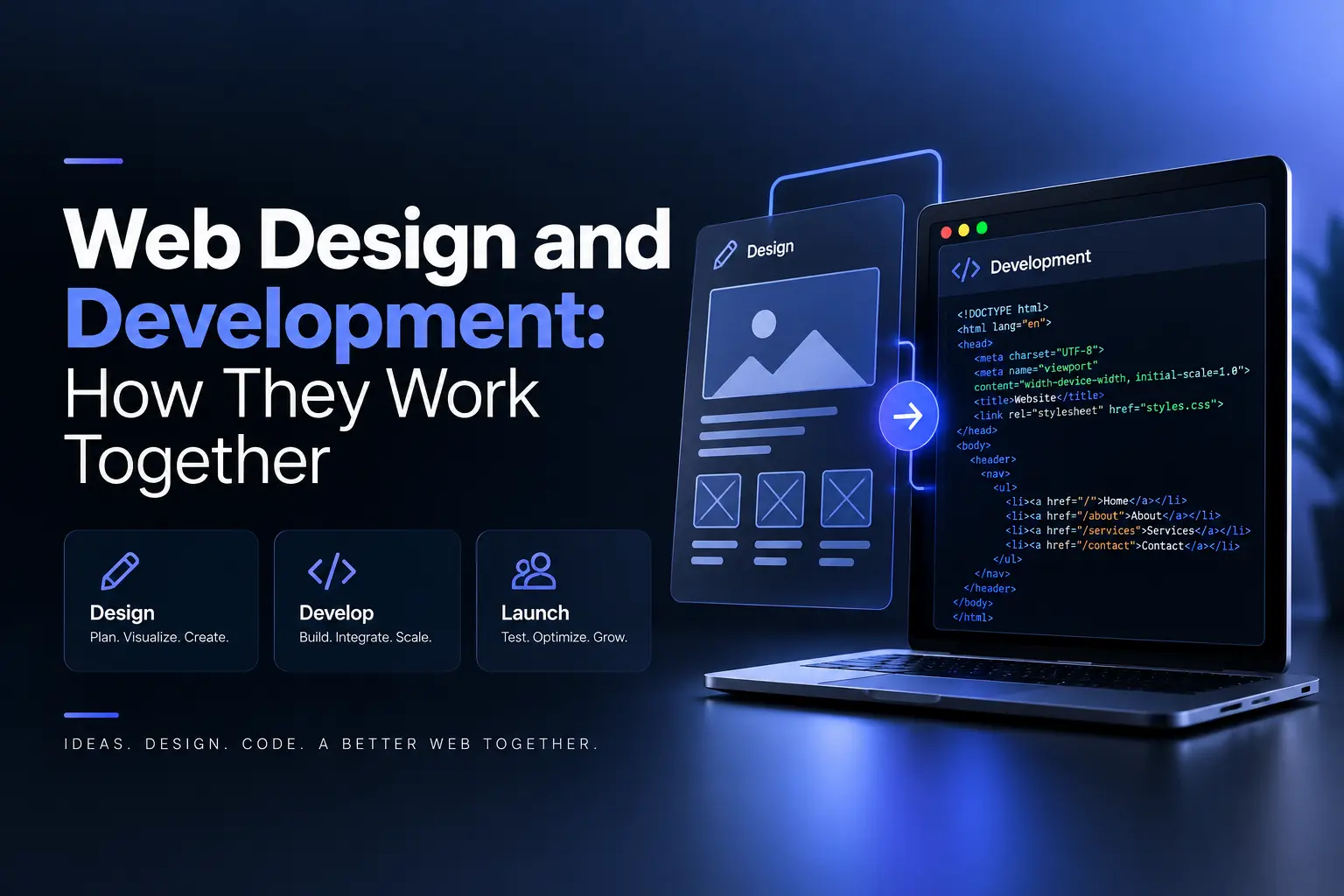
The difference between web design and web development is that web design focuses on how a website looks and feels. On the other hand, web development focuses on how it works, performs and connects with other systems. Design establishes the visual direction, layout and user experience, while development turns that direction into a functional website.
The main differences between web design and web development are listed below.
How much do web design services cost?
Web design services typically cost $1,000–$30,000+ for a complete project, while hourly rates commonly range from $50–$150 per hour. The final price depends on the provider, website type, page count, design scope and technical complexity.
The main web design cost ranges based on various factors are listed below.
Cost by design method:
Do-it-yourself (DIY) website builders: Do-it-yourself website builders can cost $0–$50 per month and suit simple websites with pre-made templates.
Freelance web designers: Freelance web designers typically charge $500–$5,000 for smaller business or portfolio websites with a defined scope.
Professional web agencies: Professional web agencies can charge $3,000–$25,000+ for custom website projects with broader design and development requirements.
In-house teams: In-house teams can cost $85,000–$300,000+ per year and suit large companies that need permanent website expertise.
Cost by website type:
Mandatory ongoing costs:
Domain name: Domain registration typically costs $10–$30 per year.
Web hosting: Web hosting can cost $5–$300+ per month, based on server requirements.
SSL security certificate: SSL certificates can range from free to $1,000 per year, depending on the certificate and provider.
Technical maintenance: Technical maintenance can cost 10%–20% of the initial build cost annually for security updates and patches.
Example: $5,000 design budget
UX strategy and discovery: UX strategy and discovery can account for 15% ($750) for competitor research and user flows.
Wireframing and prototyping: Wireframing and prototyping can account for 20% ($1,000) for early layout planning.
Visual UI design: Visual UI design can account for 35% ($1,750) for custom visuals, brand styling and assets.
Front-end development: Front-end development can account for 25% ($1,250) for website implementation.
QA and launch: QA and launch can account for 5% ($250) for speed checks, browser testing and deployment.
Why is web design still worth it in 2026?
Web design is still worth it because artificial intelligence and templates can produce basic websites quickly, but businesses still need clear strategy, distinctive branding and effective user experiences. A professional website can support trust, conversions, search visibility and long-term business growth.
Human expertise adds value when a website needs to reflect a brand, address specific customer needs and support business goals. Strong web design also helps businesses meet higher expectations for mobile usability, performance, accessibility and clear conversion paths.
The value also extends beyond visual appeal. Businesses can use web design to support complex integrations, efficient performance and scalable website structures, while custom solutions can help avoid the limitations of generic template-based sites.
What web design services are best for small businesses?
Freelance and boutique web design services are often the best fit for small businesses that need a professional website at a manageable cost. Do-it-yourself (DIY) website builders suit businesses with very simple requirements and limited budgets, while agencies fit larger projects with custom functionality and ongoing support.
For a simple brochure website, Wix or Squarespace can provide a practical starting point with ready-made templates and straightforward site management. WordPress.org offers greater flexibility for content-heavy websites, although it requires separate hosting and regular maintenance.
For stronger visual control, Webflow supports more customized layouts and interactions. Shopify suits small businesses whose primary requirement is an online store.
A freelancer or boutique agency becomes a stronger choice when the website needs custom layouts, integrations, conversion-focused pages or professional project management. The best option should match the business's website requirements, budget and available technical resources.
How to choose a web design company?
Choose a web design company based on relevant experience, technical expertise, clear communication, transparent pricing, ownership terms and post-launch support. The right company should match your business goals, technical requirements, budget and expected outcomes.
The key factors to consider are listed below.
Relevant portfolio and experience: Relevant portfolio and experience show whether the company has handled projects similar to your industry, website type, functionality and technical requirements.
Technical expertise: Technical expertise confirms whether the company can work with your required CMS, frameworks, integrations and hosting environment.
Business understanding: Business understanding shows whether the company has a clear view of your target audience, goals, required pages and key functionality.
Communication and process: Communication and process determine how the team manages project updates, milestones, feedback, decisions and day-to-day coordination.
Performance and scalability: Performance and scalability indicate whether previous projects meet requirements for Core Web Vitals, accessibility, security, SEO and future growth.
Pricing and ownership: Pricing and ownership clarify deliverables, revisions, payment terms, change costs and your rights to the domain, source code and website assets.
Client reviews and references: Client reviews and references provide insight into delivery, communication, budget control and post-launch support from previous customers.
Post-launch support: Post-launch support covers maintenance options, update procedures, support availability and response times after the website goes live.
Code and handover: Code and handover terms confirm access to source code, administrator credentials, documentation and other project assets for future website management.
How to compare web design companies?
Compare website design companies on portfolio quality, relevant experience, pricing, turnaround time and support terms. Verify client reviews and case studies to confirm the company can deliver results similar to your goals.
What should a web design portfolio include?
A website design portfolio includes live websites, relevant industry examples, the designer’s role in each project and measurable results such as traffic, conversions or other documented outcomes.
What questions should businesses ask before hiring a web designer?
Ask about the design process, platform choice, file and code ownership, revision limits, timeline, pricing, post-launch support and client references. These answers clarify expectations before the project starts.
What should a web design contract include?
A web design contract includes the scope, deliverables, timeline, payment schedule, cancellation terms, intellectual property ownership, revision limits, completion criteria and post-launch support to prevent disputes.
How to evaluate web design results?
Evaluate web design results through load speed, mobile usability, conversion rate, bounce rate, user feedback and SEO performance. Compare these measures with the previous site to identify measurable improvements.
.svg)
.svg)
.svg)
.svg)